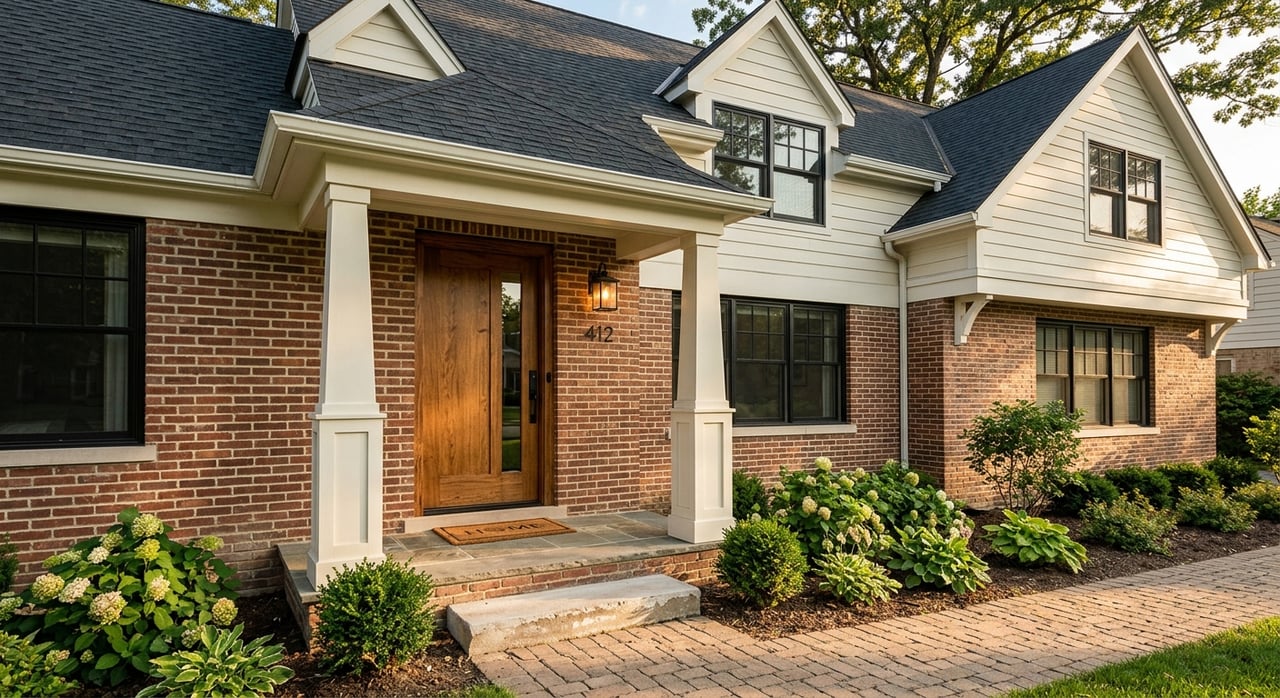
La Plata MD Neighborhoods and Homes: Historic to New
April 2, 2026
April 2, 2026
If you want a small-town setting without giving up newer housing options, La Plata stands out. You can find a historic downtown with a traditional street grid, museums, shops, and cafés, then drive a short distance to areas where planned growth and new construction are shaping the next chapter of town life. If you are trying to narrow down where to buy in La Plata, this guide will help you compare the pockets that blend historic charm and newer homes so you can focus your search with more confidence. Let’s dive in.
La Plata is the seat of Charles County and covers about 7.4 square miles. The latest U.S. Census Bureau estimate puts the population at 11,374, with an owner-occupied housing rate of 80.4%, a median owner-occupied home value of $428,400, and a median household income of $121,208. Those numbers help explain why many buyers see La Plata as a stable, owner-focused market with a strong local identity.
La Plata also offers a practical location for people who want a town-centered lifestyle while staying within regional reach of Washington, D.C. State planning materials place the town roughly 30 to 35 miles from D.C., and the Census Bureau reports a mean travel time to work of 39.6 minutes. In other words, La Plata can work well if you want a smaller community feel, but you should not expect an inner-suburb commute.
One of the easiest ways to understand La Plata is to look at it in two broad sections. Official planning materials note that US 301 bisects the town, with the historic downtown, county courthouse, and office buildings to the east, and more rural and residential areas to the west. That east-west contrast is a helpful starting point for buyers.
For many home shoppers, the choice comes down to this: do you want the in-town character and older fabric of the historic core, or do you prefer newer construction in the growth areas west and southwest of town? Both options can be appealing, but they offer different day-to-day experiences.
If you are drawn to places with a more established feel, downtown La Plata is the clearest match. The town is a Main Street Maryland affiliate, and its Main Street program highlights historic architecture, locally owned shops and boutiques, arts, events, restaurants, and cafés as defining features of the downtown area.
Charles County tourism materials also describe La Plata as a walking town with quaint shops and coffee shops. That matters if you want a neighborhood where errands, dining, or weekend outings feel connected to a recognizable town center instead of a purely suburban layout. In practical terms, the most historic-feeling pocket is the downtown core east of US 301, especially around Queen Anne Street, Kent Avenue, and the civic and museum block.
Part of downtown La Plata’s appeal is that the town actively works to preserve its character. La Plata has both a Historic Preservation Commission and a Design Review Board, and the Design Review Board reviews building size, shape, materials, and signage so development fits the downtown or commercial highway corridor.
The town’s FY2025 budget also notes ongoing support for Main Street initiatives and work on a new form-based code for downtown areas. For buyers, that is a good signal that preserving the look and feel of the historic core is not accidental. It is part of how the town manages growth.
Several local landmarks help define the area. The town points to Town Hall on Queen Anne Street, the La Plata Train Station Museum at 101 Kent Ave., and the La Plata Firehouse Museum at 3 Firehouse Alley as downtown anchors.
The train station museum is especially notable because the town describes it as the sole surviving passenger station on the Pope’s Creek Line. Even if you are not house hunting for a historic property specifically, these kinds of civic and cultural landmarks add to the texture of daily life downtown.
If your priority is newer construction, larger planned communities, or a more recently developed setting, the strongest story is west and southwest of the historic core. Town budget documents show that development remains active, with major projects including Pinegrove, Villages at Rosewick, The HUB, and Hawthorne Yards.
The FY2025 adopted budget says Pinegrove, formerly Heritage Green, is expected to see 200 new homes built in FY2025 as part of a plan totaling 3,170 proposed dwelling units. The town’s FY2024 financial report also notes that Pinegrove recorded 137 building permits and 68 use and occupancy permits in FY24. That is a strong indicator that La Plata’s new-build activity is real and ongoing, not just planned on paper.
The town’s infrastructure planning points to the same general pattern. According to the FY2025 budget, the Mary Ball Pump Station serves a rapidly growing area north of Shining Willow Way and west of US 301, and upgrades are needed because of surrounding pump stations and planned developments.
That is one of the clearest official signs that newer residential growth is concentrated outside the historic downtown core. If you are comparing location options, this means the west and southwest sections of La Plata are the places to watch for newer homes and planned-community living.
Newer neighborhoods often appeal to buyers who want more current floor plans, recently built systems, and a more uniform community layout. While every subdivision is different, La Plata’s growth areas may be a better fit if you prefer homes that feel move-in ready from day one or want to explore communities developing alongside new infrastructure.
At the same time, town documents show that growth is active but not unlimited. The FY2025 budget notes water and wastewater investments tied to development, including a new water line near Wills Park and US 301, while also stating that the town has reached water appropriation limits and is working with Charles County on a water purchasing agreement. That is useful context if you are trying to understand how growth is being managed over time.
Not every appealing area in La Plata fits neatly into either a historic downtown or a brand-new subdivision. Some parts of town offer an established residential feel that sits between those two experiences.
A good example is the Willow Lane and Radio Station Road corridor. Based on school locations and opening dates, this area reads as a long-established part of La Plata rather than a new-build zone. Milton M. Somers Middle opened in 1964, Walter J. Mitchell Elementary in 1966, and La Plata High moved to Radio Station Road in 1979.
For buyers, this kind of corridor can offer a practical middle ground. You may find a more settled neighborhood pattern and mature community feel without being in the oldest part of downtown.
If walkability is high on your list, downtown La Plata is the strongest fit based on the town’s own descriptions. The Main Street district emphasizes shops, dining, events, and civic landmarks in a compact area, and tourism materials specifically describe La Plata as a walking town.
That said, walkability can mean different things depending on your routine. Downtown may be better if you want to be near local businesses and events, while established or newer residential sections may work better if your priorities are lot size, home age, or access to commuter routes. It helps to define whether you want everyday errands on foot or simply a neighborhood that feels connected and easy to navigate.
If schools are part of your decision, verify the assignment by address before you make assumptions. Charles County Public Schools states that school assignment is address-based, and the system provides a school locator tool for confirmation.
Current La Plata-area school anchors listed by the district include Mary H. Matula Elementary, Walter J. Mitchell Elementary, Milton M. Somers Middle, La Plata High, and the Early Learning Center. Buyers should also know that feeder patterns are not always simple. For example, Matula feeds Somers, Mitchell feeds Somers and Piccowaxen, and La Plata High draws from Henson, Piccowaxen, and Somers, so address-level verification is especially important.
La Plata is often appealing to buyers who want more space and a defined town center while staying connected to the broader metro region. Official planning materials describe it as a bedroom community for the Washington area, which lines up with what many commuters are looking for.
Still, it is smart to go in with clear expectations. The town is about 30 to 35 miles from Washington, D.C., and the mean travel time to work is 39.6 minutes according to the Census Bureau. If you commute regularly, your best neighborhood fit may depend just as much on your route preferences and timing as on the style of home you want.
If you love local character, a traditional town layout, and being close to shops, cafés, and civic landmarks, the downtown side of La Plata may be your best match. It offers the clearest sense of history and place, especially east of US 301 around the Main Street area.
If you want newer construction and are interested in planned growth areas, look west and southwest of town where projects like Pinegrove and other developments are active. If you want something in between, established in-town residential corridors around Willow Lane and Radio Station Road may be worth a closer look.
The key is knowing what matters most to you before you tour homes. When you compare home age, location, commute, walkability, and school assignment together, La Plata becomes much easier to navigate.
If you are planning a move in Charles County and want help comparing La Plata’s historic and newer-home pockets, Theresa Shoptaw can help you narrow down the right fit and move forward with a clear plan.
Stay up to date on the latest real estate trends.
Thanks to her multi-faceted expertise, Theresa can offer her clients a comprehensive service. She is a true expert on the dynamics of the real estate market in the DMV, and she has a unique talent for educating her clients so that they can make informed decisions about their real estate investments. With her mastery of cutting-edge internet technologies, she can also market and find homes with exceptional speed and accuracy.