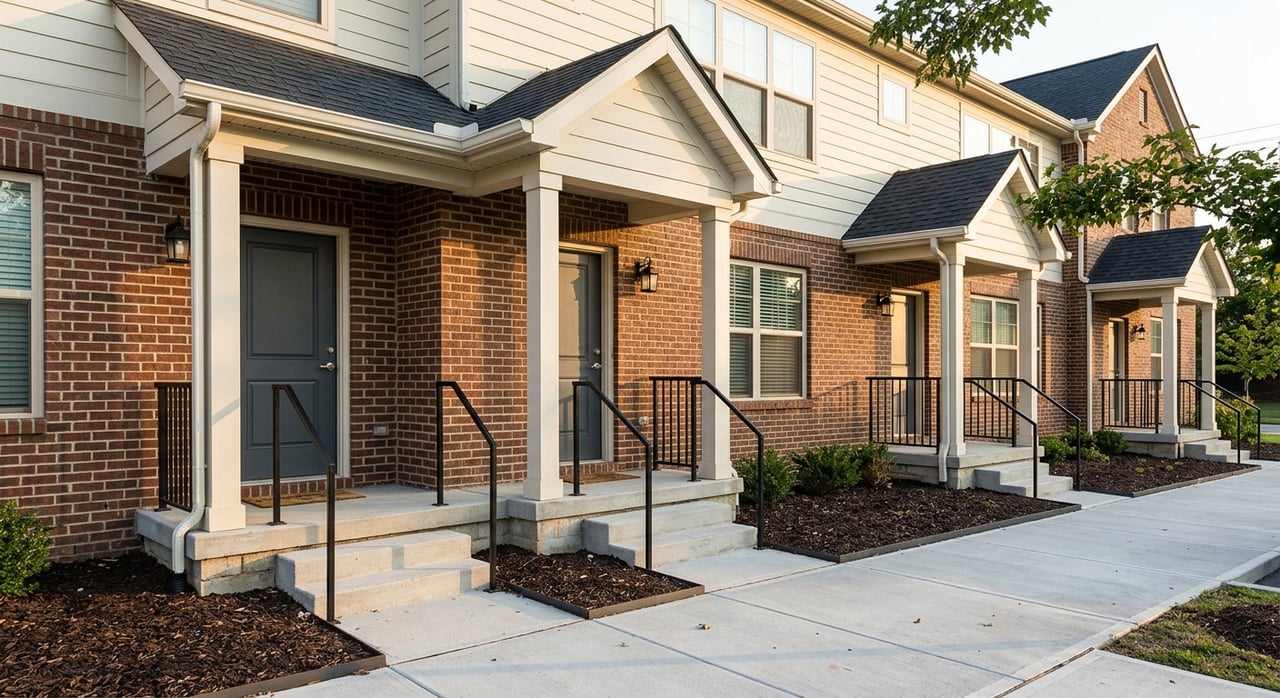
St. Charles MD Investment Property Guide for Townhomes
April 23, 2026
April 23, 2026
If you are thinking about buying a townhome or condo as an investment in St. Charles, you are probably asking a simple question: will the numbers work? That is the right place to start, especially in a market where rents look solid but monthly ownership costs can vary a lot from one community to the next. In this guide, you will get a practical look at St. Charles rent trends, HOA and condo fee factors, local landlord rules, and the questions you should ask before you buy. Let’s dive in.
St. Charles, in the Waldorf area of Charles County, offers the kind of attached housing inventory many investors look for when they want a more approachable entry point than detached homes. County data shows that 20.1% of housing units are 1-unit attached, which means townhomes are a meaningful part of the local housing mix, while larger multifamily buildings make up a smaller share of the market. That matters because your best rental comps will usually come from homes that look and function like the property you plan to buy.
The rental side of the market is active enough to justify a serious buy-and-hold review. According to Realtor.com’s St. Charles neighborhood data, the median rent was $2,650 per month in March 2026, with 52 active rentals and 137 active for-sale listings. The same report showed rents up 8.61% year over year and rental listings down 22.22% year over year, which points to ongoing tenant demand.
When you study St. Charles as an investor, property type matters. Apartments.com rent trends for Saint Charles show an overall average rent of $1,662, but that broad figure includes different housing types. For attached-home investors, the more useful benchmark is the townhome segment, where reported rents are much closer to the mid-$2,000s.
That same Apartments.com data shows average rents of $1,662 for one-bedrooms, $1,874 for two-bedrooms, $2,865 for three-bedrooms, and $3,339 for four-bedrooms. Realtor.com also reports a $2,695 median rental price for 3-bedroom condos in St. Charles. Taken together, the data suggests that well-positioned townhomes and larger condos can support rents that are often attractive on paper, but only if your total monthly expenses stay under control.
Current rental listings help paint a more realistic underwriting picture than averages alone. Recent St. Charles and Waldorf townhome rentals have clustered from the low $2,000s to about $3,100 per month, with examples around $2,075, $2,350, $2,549, $2,700, $2,800, $2,900, and $3,100, based on current townhome rental listings.
This spread matters because even homes in the same general area can perform very differently. Bedroom count, square footage, updates, layout, parking, and community amenities can all push rent up or down. If you are underwriting a specific unit, compare it only to similar attached homes with a close match in size, age, and finish level.
One of the biggest mistakes investors make with townhomes and condos is treating association dues like a minor line item. In reality, monthly HOA or condo fees can change your cash flow quickly, especially when your rent target is only a few hundred dollars above your full monthly carrying cost.
Recent St. Charles listings show how wide the fee range can be. One newer townhome in Saint Charles was listed with an $84 monthly HOA fee, a Heathcote Road townhome showed a $55 monthly HOA fee, and a Fieldside listing carried an annual HOA fee of $734, according to recent local listings. A lower purchase price can lose its appeal if the dues are high, while a slightly higher monthly fee may still make sense if it covers major items and helps reduce future surprise costs.
The fee itself is only part of the story. Maryland now requires reserve studies for residential condominiums and homeowners associations, with updates at least every five years. Under Maryland reserve study law, associations must review major components, estimate useful life and replacement cost, and use that information to build a funding plan that prioritizes major systems and health and safety needs.
For you as an investor, the takeaway is simple: do not judge dues by price alone. Ask what the fee covers, whether reserves appear adequate, and whether major work could trigger a future special assessment. A low monthly fee is not always a bargain if the association has underfunded roofs, paving, siding, or mechanical systems.
Amenities may support higher rents, but only if tenants value them enough to offset the cost. A current Saint Charles townhome listing highlights features such as a pool, tennis courts, a clubhouse, and walking trails, according to this Saint Charles listing example.
Those features can improve appeal, especially when tenants are comparing similar homes. Still, you should measure the possible rent premium against the monthly dues and your total ownership costs. Amenity-rich communities can be a plus, but only if the numbers remain workable.
A basic investor screen is straightforward: start with realistic monthly rent, then subtract every carrying cost. That includes mortgage principal and interest, property taxes, insurance, HOA or condo dues, property management, maintenance, and a vacancy reserve.
In St. Charles, this matters because the market appears to support rents in the mid-$2,000s, but small differences in debt service or association fees can erase your margin. The local rent and fee data suggests that an investment may look strong at first glance and still underperform once you account for all recurring costs. Conservative underwriting is your friend here.
Countywide vacancy data adds useful context. The Charles County 2024 ACS 1-year estimates reported a 7.3% rental vacancy rate, up from 5.0% in the 2020 Census profile, according to Charles County ACS housing data. That does not mean every St. Charles rental is hard to lease, but it does suggest you should build in a realistic vacancy reserve instead of assuming perfect occupancy.
At the same time, St. Charles neighborhood market data still shows visible rental demand. The best approach is to underwrite based on both realities: tenants are active, but you should still prepare for turnover, marketing time, and occasional downtime between leases.
Before you buy, make sure you understand the legal side of being a landlord. Maryland’s security deposit law generally limits a deposit to one month’s rent, with a narrow exception that can allow up to two months in specific utility-assistance situations. The law also requires a receipt, deposit handling through a Maryland financial institution, and return of the deposit within 45 days after the tenancy ends, along with any required itemized statement, under the current Maryland security deposit statute.
This is not a small detail. If a landlord does not follow the rules, the law allows for serious penalties, including potential treble damages and attorney’s fees. For investors, good systems and clean documentation are just as important as finding the right property.
Maryland also requires landlords to address conditions that create a serious and substantial health or safety risk. Under the state’s repair statute, that can include issues involving heat, electricity, hot or cold running water, or sewage disposal. The law presumes that more than 30 days after notice is unreasonable in these cases.
If you are evaluating an older townhome or condo, this should shape your maintenance budget. Deferred repairs can become expensive quickly, and your reserve planning should reflect the age and condition of the home, not just the projected rent.
One local detail that can catch investors off guard is water and sewer responsibility. Charles County states that water accounts are tied to the deed, which means the owner remains responsible if a tenant does not pay. The county also notes that the owner receives late notices and that tenant payment plans require written landlord approval, based on the county’s water and sewer billing FAQs.
The same county page says a rental licensing program is underway, so you should verify any current registration or permitting requirements before closing. These are the kinds of details that can affect your setup costs, timeline, and risk management.
Before you move forward on a St. Charles townhome or condo, ask questions that go beyond list price and rent estimate.
These questions can save you from buying a property that looks good online but performs poorly in real life.
St. Charles can make sense for investors who want attached housing in Southern Maryland, especially if you focus on realistic rent comps and disciplined underwriting. The market data points to rents that can support buy-and-hold analysis, but HOA structure, reserve health, vacancy assumptions, and landlord responsibilities all deserve close review before you commit.
If you want local insight on St. Charles townhomes, condos, and nearby investment opportunities, connect with Theresa Shoptaw for practical guidance grounded in Southern Maryland market knowledge.
Stay up to date on the latest real estate trends.


Thanks to her multi-faceted expertise, Theresa can offer her clients a comprehensive service. She is a true expert on the dynamics of the real estate market in the DMV, and she has a unique talent for educating her clients so that they can make informed decisions about their real estate investments. With her mastery of cutting-edge internet technologies, she can also market and find homes with exceptional speed and accuracy.